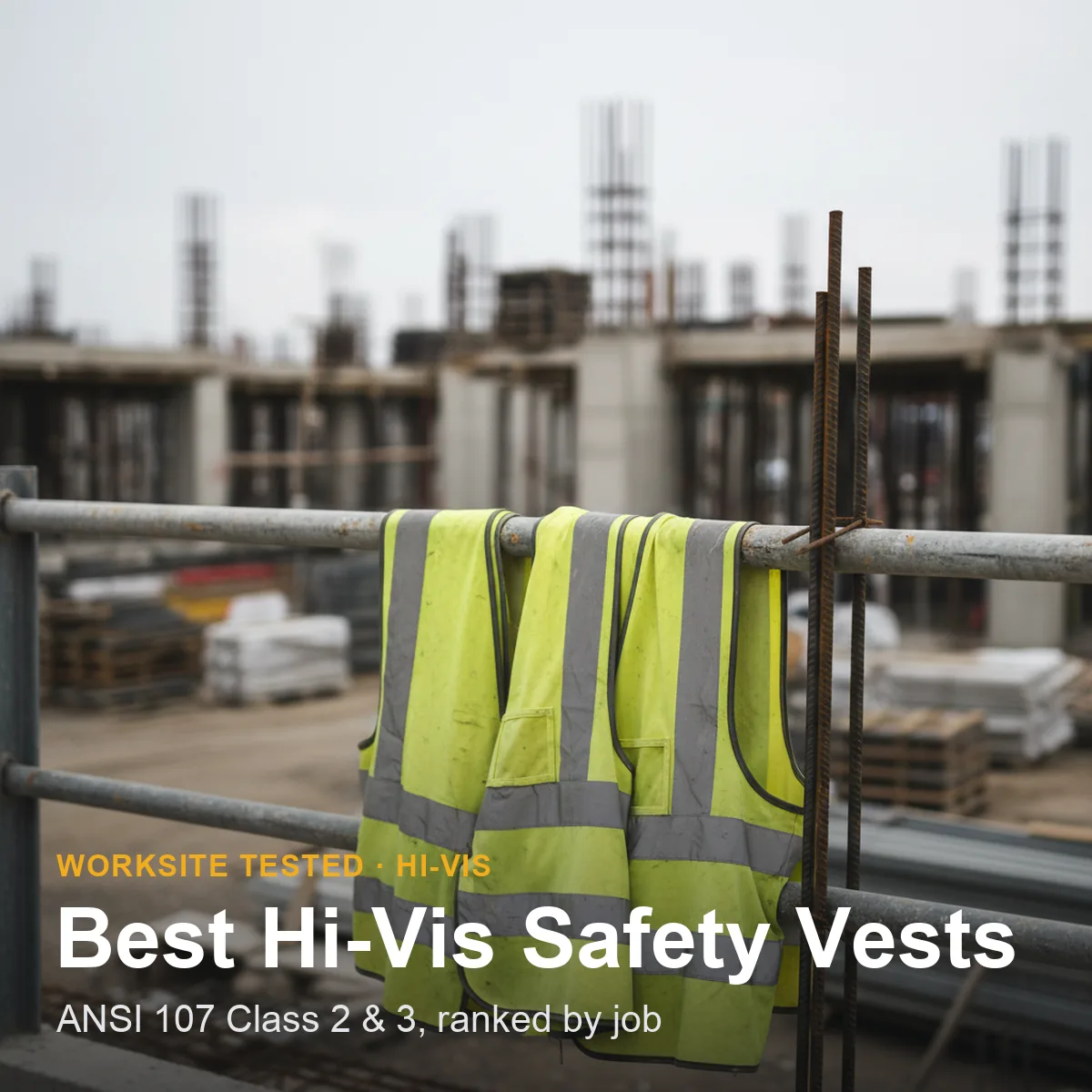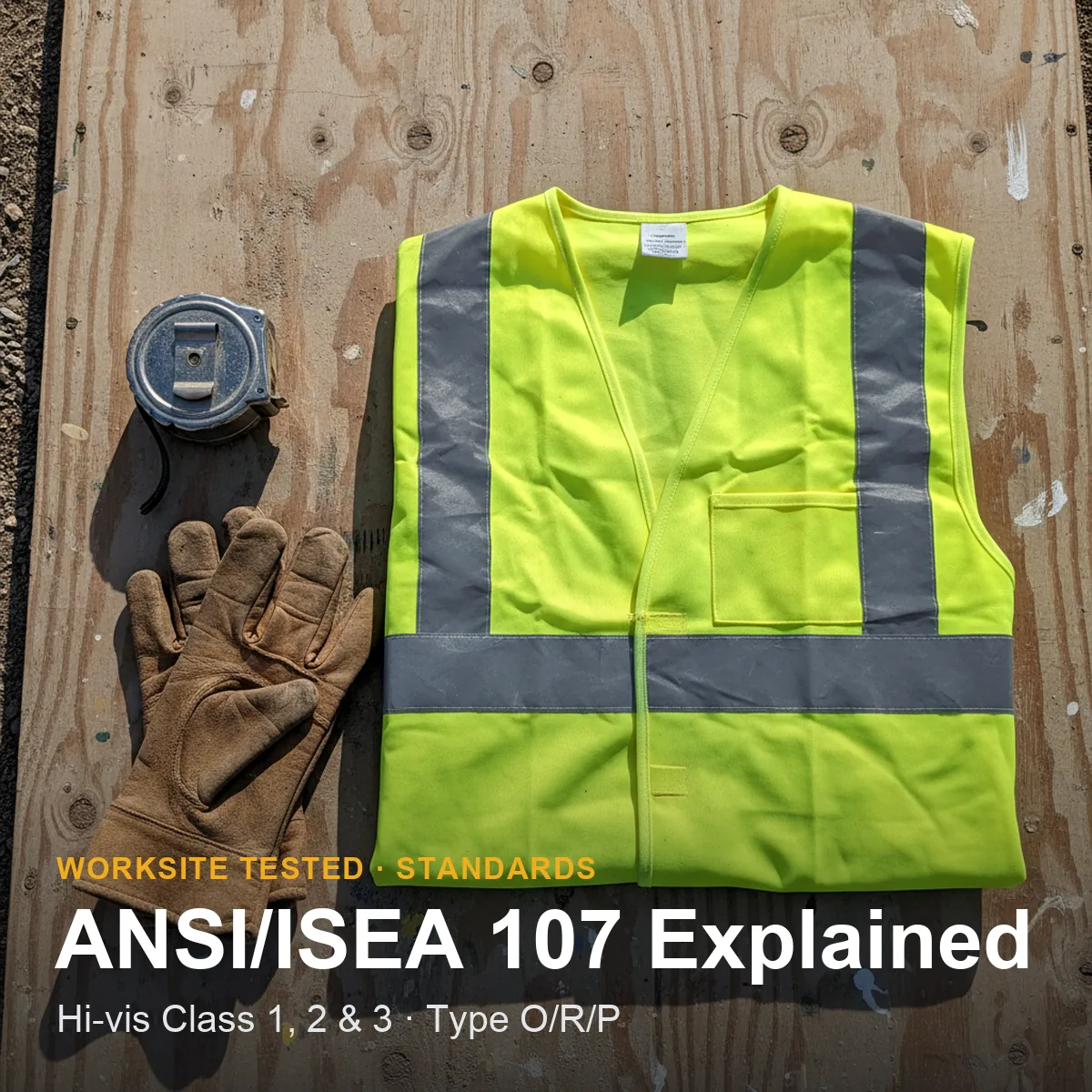

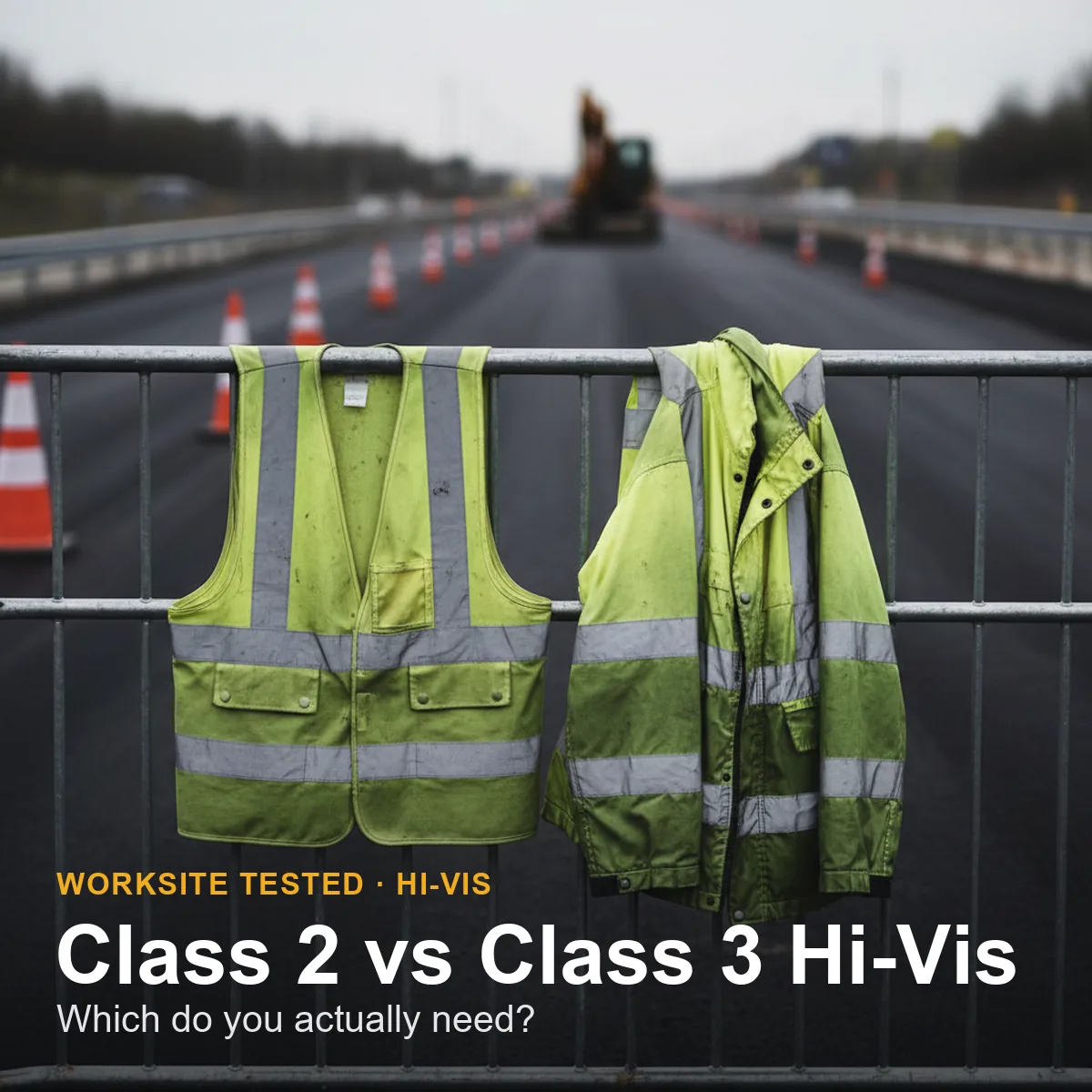
Short answer: pick Class 2 for moderate-speed daytime work in good light — up to roughly 50 mph traffic — and step up to Class 3 when traffic is moving 50 mph or faster, or whenever you are working at night, in poor light, in rain or fog, or against a visually busy background. Both are ANSI/ISEA 107 Type R "roadway" classes; the real difference is how much high-visibility material the garment carries and whether it covers your arms. Every product in this guide is in stock at Working Person's Store as of June 28, 2026, with prices and class markings pulled directly from each listing.
The trap people fall into is treating Class 3 as "the safe choice" and Class 2 as a downgrade. It is not. Class 2 is the federal minimum for highway right-of-way work — fully legal — and over-dressing a warehouse picker in a Class 3 jacket just makes them hot and slower. The right call is a hazard decision, not a "more is better" reflex. Below I lay out the standard, the material minimums (only the numbers that are actually in the standard), the federal rules, and six real garments that show what each class looks like on the rack.
Key Takeaways
- Class 2 and Class 3 are both Type R (roadway). Under ANSI/ISEA 107-2020, Type R covers workers exposed to roadway traffic and moving equipment and is the tier for highway/DOT-style work. (Type O is off-road, Class 1 only; Type P is public safety — police/fire/EMS.)
- The material minimums are the real difference. A Type R Class 2 garment requires at least 775 in² of fluorescent background material and 201 in² of retroreflective material. A Type R Class 3 garment requires at least 1,240 in² of background and 310 in² of retroreflective — and it must have sleeves.
- Decide by speed, light, and background. Class 2 suits moderate traffic up to roughly 50 mph with daytime visibility in well-lit areas. Class 3 is called for at 50 mph or more, and for nighttime work, poor lighting, or complex backgrounds.
- Class 2 is the federal floor, not a loophole. 23 CFR Part 634 requires anyone working within a Federal-aid highway right-of-way who is exposed to traffic or construction equipment to wear apparel meeting Performance Class 2 or 3 — Class 2 is the minimum acceptable class. The MUTCD mirrors this.
- OSHA enforces it through the General Duty Clause. OSHA has no hi-vis-specific standard for general highway work, but its 2009 interpretation letter says Section 5(a)(1) of the OSH Act requires hi-vis apparel for workers exposed to being struck by traffic in road work zones.
- Internal links: ANSI/ISEA 107 classes & types explained | Best hi-vis safety vests | Best hi-vis jackets & rainwear
First, the rule everyone skips: it's a Type, then a Class
Before you argue Class 2 vs Class 3, get the Type right. ANSI/ISEA 107-2020 sorts every garment into three Types by use environment:
- Type O (Off-Road): for controlled, off-roadway settings like warehouses. Available only in Class 1. This is the lowest tier — Type O Class 1 requires a minimum of 217 in² of background material and 155 in² of retroreflective material, intended for workers away from roadway traffic.
- Type R (Roadway): for workers exposed to roadway traffic and moving equipment. Available in Class 2 and Class 3. This is the Type for highway, DOT, flagging, and work-zone jobs — when you read "Class 2 vs Class 3" below, both are Type R.
- Type P (Public Safety): for police, fire, and EMS. Available in Class 2 and Class 3.
So the label you want for highway right-of-way work reads Type R Class 2 or Type R Class 3. A "Class 2" garment that is actually Type O is a different animal. For the full breakdown of every Type and Class, see our ANSI/ISEA 107 classes and types explainer.
What Class 2 and Class 3 actually require
The difference between the two classes is not vibes — it is square inches of material, written into the standard. Here are the Type R minimums, verified against the ANSI/ISEA 107-2020 deep dive and corroborated by Triple Crown Products:
- Type R Class 2: minimum 775 in² of fluorescent background material + 201 in² of retroreflective material.
- Type R Class 3: minimum 1,240 in² of background material + 310 in² of retroreflective material.
Triple Crown Products states the same figures in round terms — about 775 square inches of bright fabric and 201 square inches of reflective tape for Class 2, around 1,240 square inches of fabric and 310 square inches of tape for Class 3 — which corroborates the ANSI/ISEA 107-2020 Type R minimums.
One nuance that trips people up: for the smallest size in a Type R size range, the background-material minimum drops. Class 2 goes from 775 in² down to 540 in², and Class 3 goes from 1,240 in² down to 1,000 in². The retroreflective minimums (201 in² for Class 2, 310 in² for Class 3) do not change for smaller sizes. That is why a youth-small Class 3 is still compliant on less background fabric — the reflective requirement holds the line.
The other half of the difference is shape. Per Triple Crown Products, the core design split is that Class 2 apparel is typically vests, polos, or short-sleeve shirts with stripes over the shoulders and around the waist — torso and shoulder visibility. Class 3 apparel must have sleeves — jackets, long-sleeve shirts, or coveralls — so the reflective tape outlines the whole body and conveys a clear human shape in rain, fog, or at night. That full-body outline is the safety reason Class 3 exists; it is not just "more fabric."
Class 2 vs Class 3 at a glance
| Factor | Type R Class 2 | Type R Class 3 |
|---|---|---|
| Background material (min) | 775 in² (540 in² smallest size) | 1,240 in² (1,000 in² smallest size) |
| Retroreflective material (min) | 201 in² | 310 in² |
| Typical garments | Vests, polos, short-sleeve shirts | Jackets, long-sleeve shirts, coveralls (sleeves required) |
| Coverage | Torso + shoulders | Full body — limbs outlined |
| Traffic speed | Up to ~50 mph | 50 mph or more |
| Light / background | Daytime, well-lit areas | Night, poor light, complex backgrounds |
Decision rule in one line: under ~50 mph in daylight and good light, Class 2 is compliant; at 50 mph+, or for night, poor lighting, or complex backgrounds, go Class 3. (Sources: ANSI/ISEA 107-2020 deep dive; Triple Crown Products.)
Is Class 2 even legal on a highway? Yes — it's the floor
This is the question that drives the over-buying. Class 2 is not a downgrade you have to apologize for — it is the federal minimum.
Federal rule 23 CFR Part 634 (Worker Visibility) requires all workers within the right-of-way of a Federal-aid highway who are exposed to traffic or to construction equipment to wear high-visibility safety apparel meeting the Performance Class 2 or 3 requirements of ANSI/ISEA 107-2004. The minimum acceptable class is Class 2. The compliance date was no later than November 24, 2008 — this has been the law for years.
The MUTCD mirrors that: highway workers, flaggers, and adult crossing guards must wear apparel meeting Performance Class 2 or 3 of ANSI/ISEA 107, and FHWA has accepted the revised ANSI/ISEA 107 standard as conforming to the MUTCD (the 2015 revision is what introduced the Type R and Type P designations).
So Class 2 clears the legal bar on a Federal-aid highway. Many employers still spec Class 3 for higher-speed or nighttime exposure — that is a hazard-based upgrade, not a legal requirement. Work-zone guidance from NYS LTAP puts it plainly: the MUTCD mandates only Class 2 or 3 as the minimum, but Class 3 should be considered for nighttime flagging operations and any situation with visibility issues, and ANSI recommends Class 3 for high-speed roads. The person the employer designates as responsible for worker safety makes the final call on which class.
Where OSHA fits in
People assume OSHA has a hi-vis rule. For general highway work, it does not. But that does not mean hi-vis is optional. In its August 5, 2009 interpretation letter, OSHA states that Section 5(a)(1) of the OSH Act — the General Duty Clause — requires high-visibility apparel to protect employees exposed to being struck by public and construction traffic in highway/road construction work zones. OSHA cites FHWA's 23 CFR Part 634 rule as evidence that struck-by hazards are well recognized and that hi-vis apparel is a feasible control. Translation: skip hi-vis on a road crew and OSHA can still cite you under the General Duty Clause, using the federal highway rule as the yardstick.
How to choose for your crew: speed, light, background, job
Frame the decision in four questions and the class picks itself:
- Speed: under ~50 mph daytime → Class 2 is compliant. 50 mph or faster → Class 3.
- Light: night, dawn/dusk, fog, or rain pushes you to the full-body coverage of Class 3.
- Background: visually busy scenes — equipment, signage, vegetation — favor Class 3's limb striping, which holds a human shape against the clutter.
- Job type: flaggers and DOT workers near fast traffic should default to Class 3. Parking lots, low-speed yards, and airport ramp work are typical Class 2.
And the final authority is a person, not a chart: the employer's designated safety person makes the call. The table above is your starting point, not your permission slip. (Sources: Triple Crown Products; NYS LTAP.)
Class 2 garments worth a look
MCR Safety VCL2ML — the $10 compliant Class 2 vest
This is the floor done right: a Type R Class 2 mesh vest at $9.99. Fluorescent lime polyester mesh that breathes in summer, 2-inch silver reflective stripes, hook-and-loop front, and three pockets. It is the cheapest legitimate way to put a Class 2 label on a whole crew, which is exactly what you want for low-speed lots, warehouse yards, and daytime moderate-traffic zones.
- Pros: dirt-cheap legitimate Type R Class 2; mesh breathes; three pockets.
- Cons: vest = torso/shoulder coverage only; not for 50 mph+ or night work.
Check price at Working Person's Store
Red Kap VYV6YE — durable solid-front Class 2 vest
A solid-front polyester Class 2 vest (3.6 oz, yellow/green) built to survive an industrial wash rather than to maximize summer airflow. The listing cites the older ANSI 107-2004 and 107-2010 editions — both predate the Type R/Type O split — so treat it as a Class 2 garment and confirm the Type R marking on the label if you are in a roadway right-of-way. Paired sizing runs up to 5XL; the bigger sizes cost more and are not returnable.
- Pros: launderable solid-front build; broad sizing to 5XL; unisex fit.
- Cons: older-edition citation (verify Type R on the label); large sizes non-returnable; still a vest.
Check price at Working Person's Store
Bisley By Pip 333W6059T — women's Type R Class 2 softshell
Proof that a jacket is not automatically Class 3. This is a contoured women's softshell that is a sleeved garment but only meets the Type R Class 2 material minimum — warmth and a real women's cut without paying for Class 3 coverage you may not need. The yellow/navy two-tone hides dirt better than all-lime. Right fit for women on moderate-speed daytime work; step up to a Class 3 jacket if your hazard analysis points to 50 mph+ or night.
- Pros: true women's contoured cut; warm sleeved softshell; Type R Class 2 labeled.
- Cons: Class 2, not Class 3 — not a high-speed or nighttime answer despite being a jacket.
Check price at Working Person's Store
Class 3 garments worth a look
Bisley By PIP 313M6118X-Y — cheapest path into true Class 3
If you need Class 3 but not a jacket, this long-sleeve shirt is the move. Type R Class 3, CSA Z96 marked, with heat-sealed 2-inch perforated reflective tape that runs down the arms so the garment outlines a full human shape — the entire point of Class 3. The cotton-backed performance-wicking blend (with Fresche antimicrobial treatment) wears far better in heat than a slick all-poly Class 3. At $35.99 it is the cheapest true Type R Class 3 label here, and the CSA Z96 mark adds Canadian compliance for cross-border crews.
- Pros: genuine Type R Class 3 without a jacket; cotton-backed wicking is cooler; CSA Z96 cross-border mark.
- Cons: a shirt, not a shell — for cold/wet you still want a Class 3 jacket.
Check price at Working Person's Store
Tingley Icon LTE J27122 — Class 3 waterproof, value end
When the job is Class 3 and the forecast is wet, you need a waterproof shell that still carries the full-body reflective layout. The Icon LTE is listed as ANSI Class 3 and waterproof in hi-vis yellow — the combination roadway and DOT crews need for rain shifts and night work in poor light. The category listing states Class 3 and waterproof but does not break out the square-inch figures, so I am not assigning numbers to it; confirm the Type R marking on the label for right-of-way work. At $87.99 it is the value end of the Class 3 waterproof jacket bracket.
- Pros: Class 3 + waterproof at a value price; right combo for wet, low-light roadway work.
- Cons: listing doesn't publish the square-inch breakdown — verify Type R on the label.
Check price at Working Person's Store
Carhartt 106694 Sherwood — premium Class 3 jacket
The premium Class 3 in the group, and the Carhartt name earns its keep for crews who flag or run roadway jobs through full winters and need the jacket to survive the abuse. Listed as ANSI Class 3 in Brite Lime — the right coverage tier for high-speed, low-light, complex-background work. As with the Tingley, the category listing states the class but not the square-inch breakdown, so I will not invent those numbers; verify the Type R label for right-of-way use. At $179.99 with free shipping it is a cost-per-winter decision, not a cost-per-vest one.
- Pros: durable Carhartt build for hard winters; ANSI Class 3 Brite Lime; free shipping.
- Cons: priciest pick here; listing doesn't publish square-inch figures (verify Type R label).
Check price at Working Person's Store
Frequently Asked Questions
What is the difference between Class 2 and Class 3 hi-vis?
Both are ANSI/ISEA 107 Type R roadway classes, but Class 3 carries more high-visibility material and must cover the limbs. Class 2 requires a minimum 775 in² of fluorescent background plus 201 in² of retroreflective material — typically vests, polos, and short-sleeve shirts covering the torso and shoulders. Class 3 requires a minimum 1,240 in² of background plus 310 in² of retroreflective and must have sleeves (jackets, long-sleeve shirts, coveralls) so the reflective tape outlines a full human shape. Sources: fonirra ANSI/ISEA 107-2020 deep dive; Triple Crown Products.
When is Class 3 required instead of Class 2?
Reach for Class 3 when traffic moves at roughly 50 mph or faster, or for nighttime work, poor lighting, complex backgrounds, or flagging operations. Class 2 covers moderate-speed work zones (up to about 50 mph) with good daytime visibility. The MUTCD mandates only Class 2 or 3 as the minimum, but work-zone guidance and ANSI both recommend Class 3 for high-speed roads and any visibility-compromised situation. Sources: Triple Crown Products; NYS LTAP.
Is Class 2 hi-vis legal on a highway?
Yes — Class 2 is the federal minimum, not a downgrade. 23 CFR Part 634 requires anyone working within the right-of-way of a Federal-aid highway who is exposed to traffic or construction equipment to wear apparel meeting ANSI/ISEA 107 Performance Class 2 or 3; Class 2 is the floor. The MUTCD mirrors this. Many employers still spec Class 3 for higher-speed or nighttime exposure. Sources: govinfo 23 CFR Part 634; FHWA/ISEA acceptance notice.
Does OSHA require high-visibility clothing?
OSHA has no hi-vis-specific standard for general highway work, but its 2009 interpretation letter says the General Duty Clause (Section 5(a)(1) of the OSH Act) requires hi-vis apparel for workers exposed to being struck by public or construction traffic in road work zones. OSHA cites FHWA's 23 CFR Part 634 rule as proof the struck-by hazard is recognized and that hi-vis is a feasible control. Source: OSHA standard interpretation, August 5, 2009.
What does Type R mean on a hi-vis garment?
ANSI/ISEA 107-2020 sorts garments by Type. Type R (Roadway) is for workers exposed to roadway traffic and moving equipment and comes in Class 2 and Class 3 — this is what highway and DOT-style work calls for. Type O (Off-Road) is for controlled settings like warehouses (Class 1 only). Type P (Public Safety) is for police, fire, and EMS. For highway right-of-way work, look for a Type R Class 2 or Class 3 label. Source: fonirra ANSI/ISEA 107-2020 deep dive.
How do I choose between Class 2 and Class 3 for my crew?
Frame it by speed, light, and background. Speed: under ~50 mph daytime, Class 2 is compliant; 50 mph+ go Class 3. Light: night, dawn/dusk, fog, or rain pushes you to the full-body coverage of Class 3. Background: visually busy scenes (equipment, signage, vegetation) favor Class 3's limb striping. Job type: flaggers and DOT workers near fast traffic should default to Class 3; parking, low-speed lots, and airport ramp work are typical Class 2. The employer's designated safety person makes the final call. Sources: Triple Crown Products; NYS LTAP.
Why Trust This Guide
This guide is written and reviewed by Marco Reyes, an independent work-safety-gear reviewer. Every recommendation is built on the published standards (ASTM F2413 for footwear, ANSI Z359 for fall protection, ANSI/ISEA 107 for hi-vis, the OSHA rules), manufacturer spec sheets and product labels, hands-on handling, and what tradespeople actually report — and we tell you when a number is a manufacturer claim versus an independent standard, and when a garment meets one class but not another. Every product here was pulled live from Working Person's Store on June 28, 2026, confirmed in stock, and verified against the listing. We earn an affiliate commission if you buy through some of our links, at no extra cost to you, and we never rank by commission over safety — see our affiliate disclosure.