
Fall protection is a YMYL safety topic. Every number in this article comes from the stated source — OSHA.gov regulations, official ANSI announcements, or the product listing for each item. Where a listing doesn't state a spec, I say so plainly instead of filling in the gap.
Key Takeaways
- Construction sites: OSHA requires fall protection at 6 feet (1.8 m) above a lower level (29 CFR 1926.501). General industry: 4 feet (1.2 m) (29 CFR 1910.28). These are laws, not suggestions.
- Full-body harness only. Body belts have been banned from personal fall arrest systems since 1998 (OSHA 1926.502(d)). If you see them on old gear, retire them.
- SRL vs lanyard is a clearance question, not a preference. Choose based on available fall clearance and anchor point location.
- The ANSI Z359 substandards cover different components: Z359.11 = harnesses, Z359.12 = connectors, Z359.13 = lanyards and energy absorbers, Z359.14 = SRLs. A harness that "complies with ANSI Z359" without a substandard number is an incomplete claim.
- The anchorage must support 5,000 lb per attached worker (OSHA 1926.502(d)(15)). The harness and SRL are worthless if the anchor point fails.
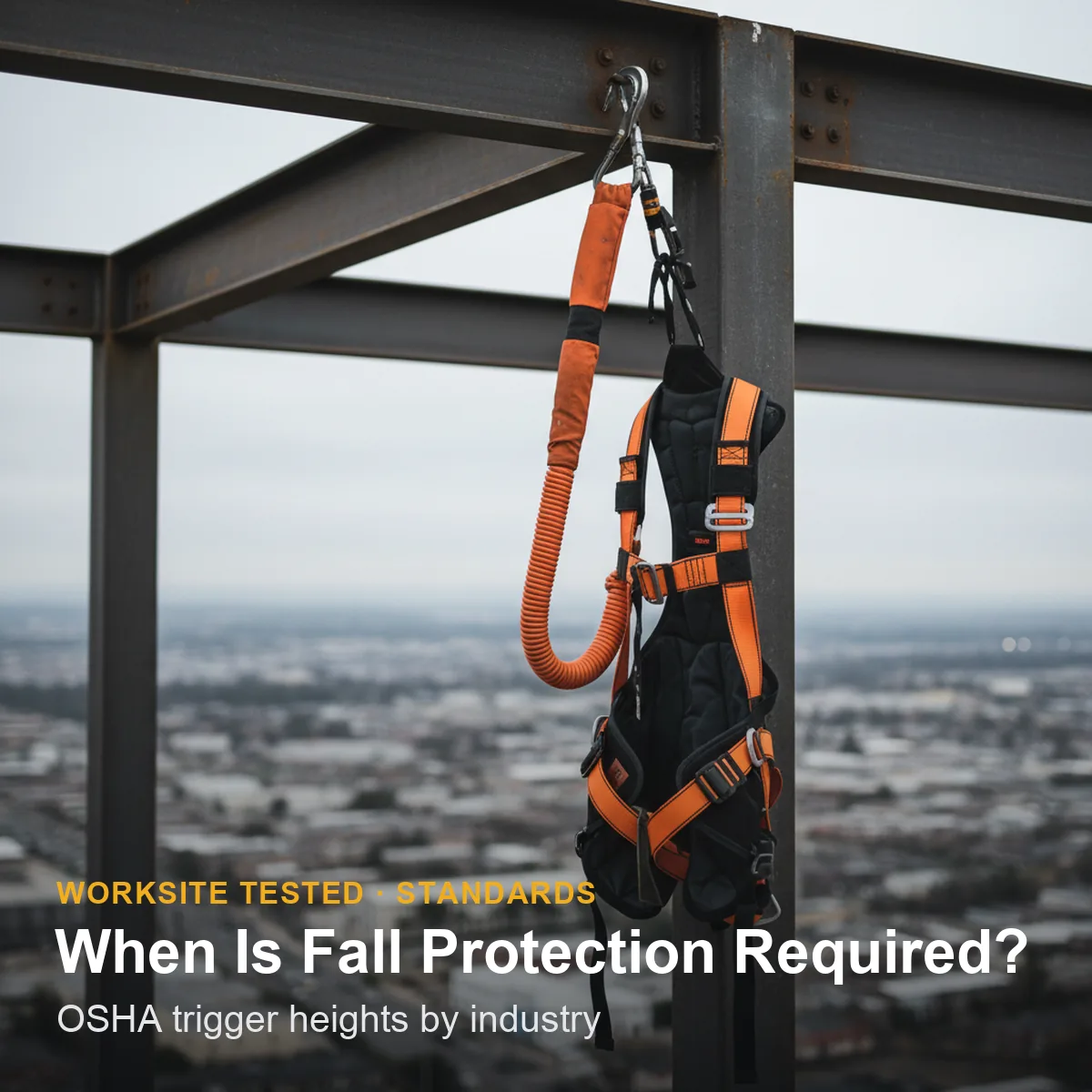
OSHA trigger heights: when fall protection is required
Two different standards govern two different industries. Getting the one that applies to your site wrong means citing a rule that doesn't apply.
| Industry | Standard | Trigger height | Notes |
|---|---|---|---|
| Construction | 29 CFR 1926.501 | 6 feet (1.8 m) | Applies to unprotected sides and edges, leading edges, holes, roofing, 6 ft deep excavations, and more. Over dangerous equipment with no protection: at any height. |
| General industry | 29 CFR 1910.28 | 4 feet (1.2 m) | Applies to working surfaces, holes, ramps, walkways, dock boards. Fixed ladders over 24 feet: fall protection required. |
| Shipyards | 29 CFR 1915 | 5 feet | — |
| Marine terminals | 29 CFR 1918 | 8 feet | — |
| Over dangerous equipment | 1926.501 / 1910.28 | Any height | Unguarded equipment requires protection regardless of fall distance. |
Source: OSHA 29 CFR 1926.501 and OSHA 29 CFR 1910.28.
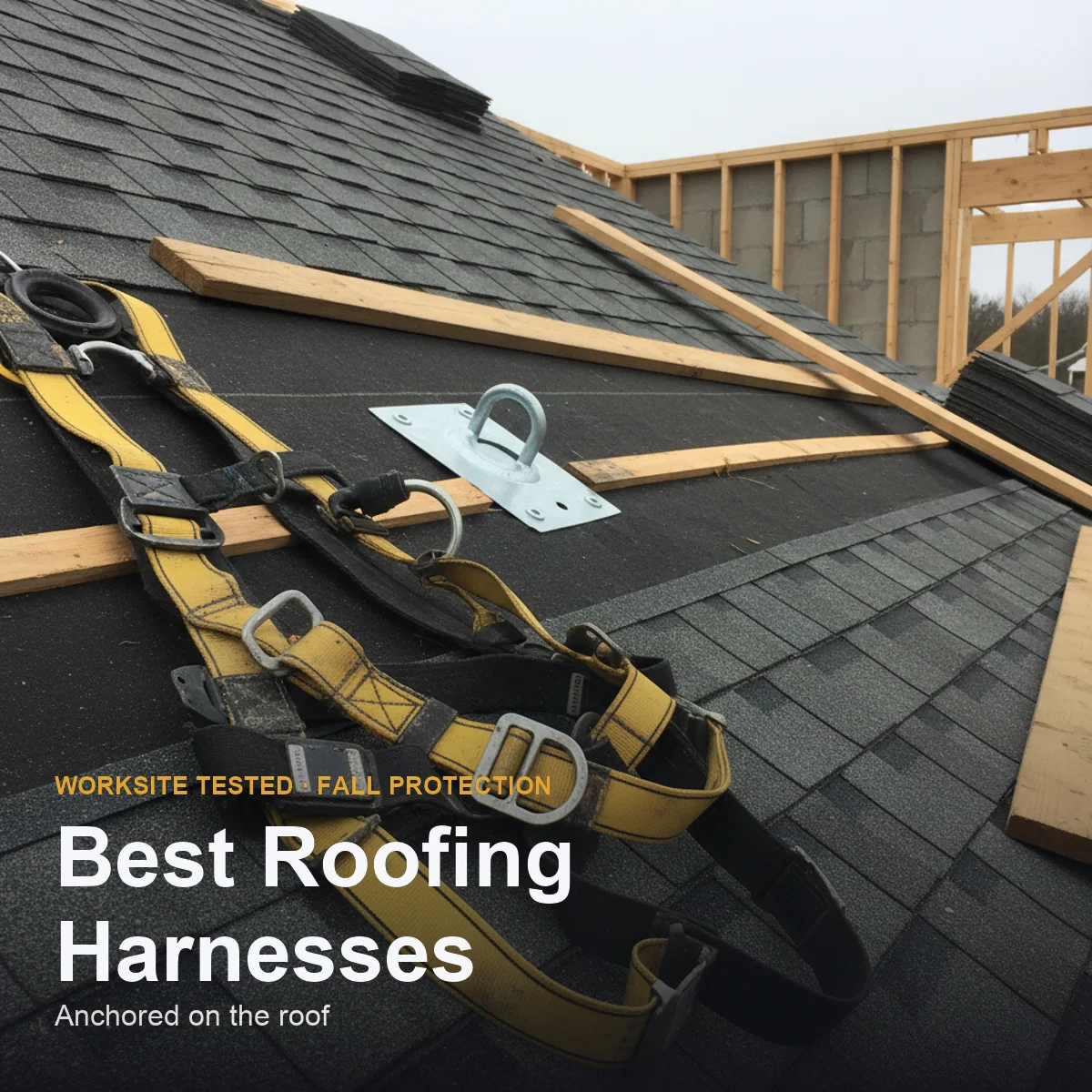
The 6 feet rule for construction covers many specific situations in 1926.501: unprotected sides and edges (b)(1), leading edges (b)(2), holes (b)(4), ramps and walkways (b)(6), excavations (b)(7), hand-laid brickwork (b)(9), low-slope roofing (b)(10), precast concrete erection (b)(12), and residential construction (b)(13). If you're on a construction site and you're 6 feet above any lower level, you need a system. That's the short version.
The four components of a personal fall arrest system
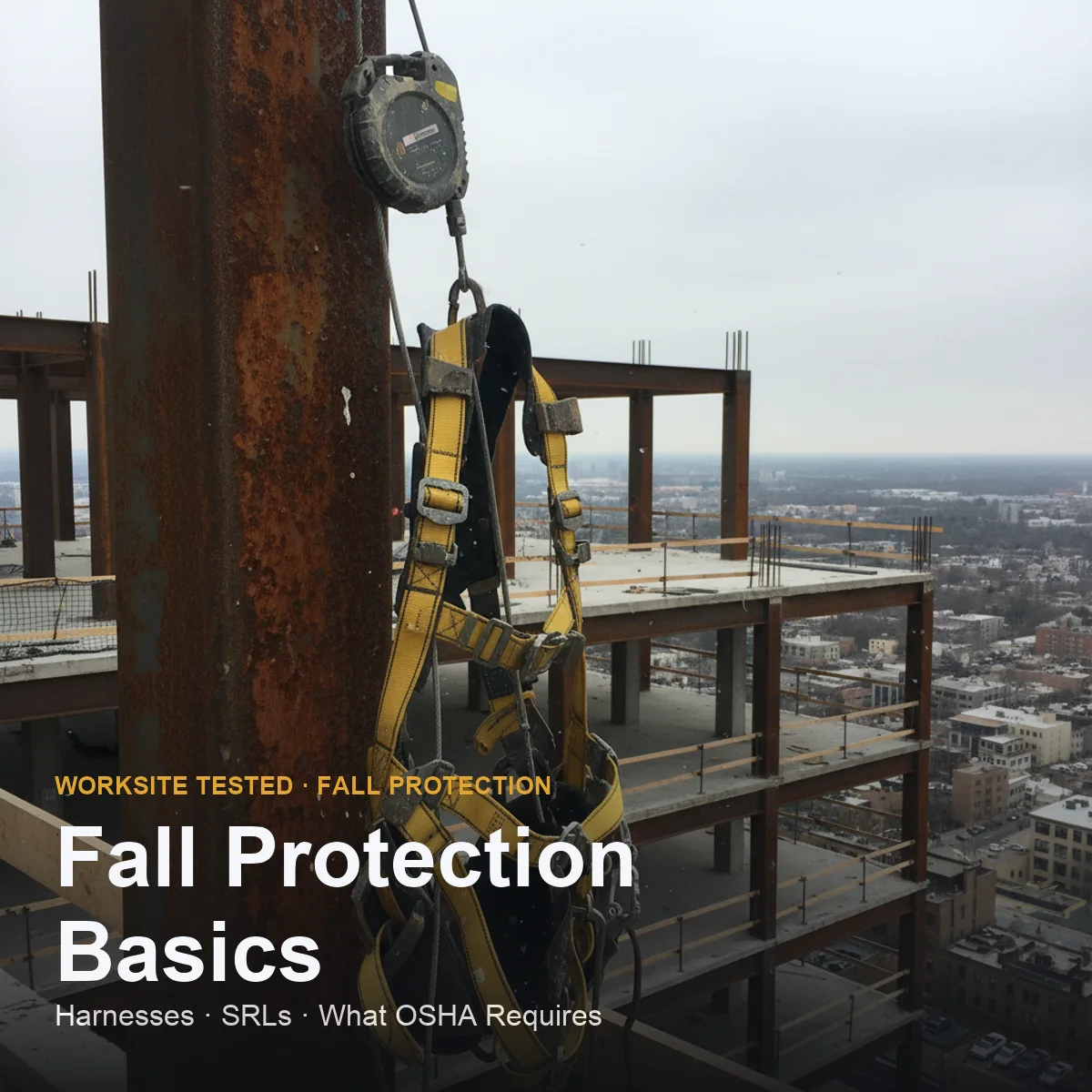
OSHA 1926.502(d) defines what a personal fall arrest system (PFAS) must do, not just what it's made of. The system has four parts that work together. Every one of them has to hold.
1. Anchorage
The attachment point for the whole system. OSHA 1926.502(d)(15) requires anchorages capable of supporting at least 5,000 pounds per attached worker, independent of any platform support. That's a fixed number — not a suggestion, not "structurally sound." If you don't know the rated capacity of your anchor point, you don't have a compliant system. Engineered anchor points with certified capacity can substitute for the 5,000 lb rule if a qualified professional designs the system. Beam clamps, D-bolt anchors, and horizontal lifelines have rated capacities — check the manufacturer documentation before you tie off.
2. Full-body harness
The only legal body support for a fall arrest system since January 1, 1998 (OSHA 1926.502(d)). Body belts are banned. The harness distributes arresting forces across the chest, shoulders, thighs, and pelvis — not across your kidneys.
The dorsal D-ring (on the back) is the only connection point for fall arrest. Sternal D-rings (on the chest) are for ladder climbing and rescue. Side/hip D-rings are for work positioning only — not fall arrest. If you clip your lanyard to a side ring, you have a positioning system, not arrest protection.
ANSI Z359.11 is the product-specific standard for full-body harnesses. Its base capacity range is 130 to 310 lb. Several harnesses in this guide are listed by manufacturers at a 420 lb capacity — that's allowed under OSHA when the manufacturer designs the harness and its energy-absorbing system together to handle that weight, but it means the harness exceeds the Z359.11 base range. If you weigh more than 310 lb, verify that your entire system — harness, SRL or lanyard, anchorage — is rated for that weight.
3. Connecting device: SRL, lanyard, or positioning lanyard
This is the link between the harness's dorsal D-ring and the anchorage. The three main types:
- Shock-absorbing lanyard: A fixed length (typically 6 ft) of webbing or rope with a built-in energy absorber that tears away to reduce arresting forces. Simple, no moving parts. Works where you have the fall clearance — see below.
- Y-style twin-leg lanyard: Two lanyards on a single harness connector, allowing 100% tie-off coverage when moving between points. One leg stays clipped while you relocate the other. Heavier and bulkier than single-leg; necessary on work where you can't tolerate going disconnected during anchor changes.
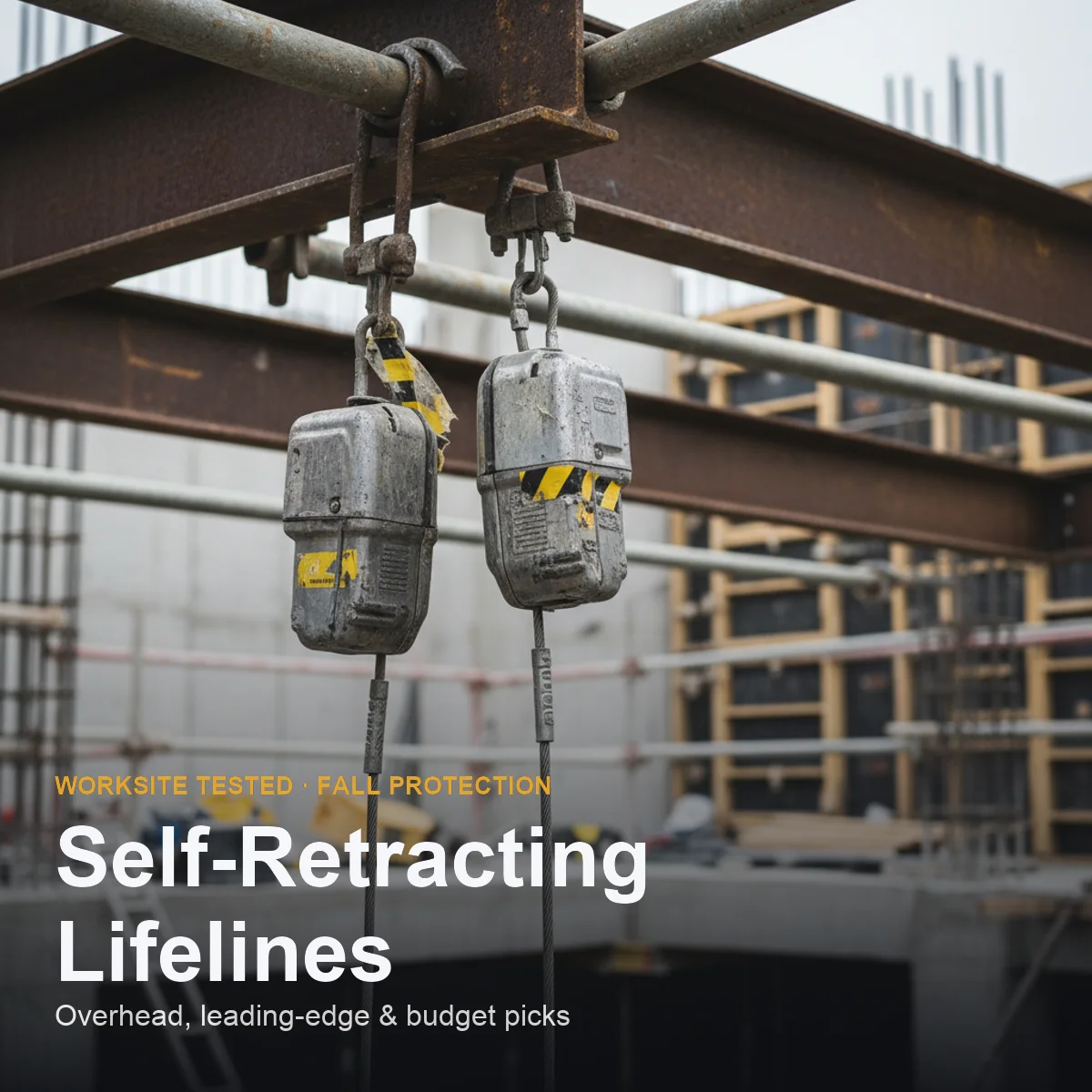
- Self-retracting lifeline (SRL): Retractable cable or webbing in a housing that locks instantly on sudden movement. Much shorter arrest distances than lanyards. Class 1 (ANSI Z359.14-2021) for overhead anchors; Class 2 for leading edges or sub-dorsal anchors. See the detailed SRL vs lanyard breakdown for when it's the right call.
4. Connectors
Carabiners and snap hooks that join the connecting device to the harness and the anchorage. ANSI Z359.12 requires a minimum gate-face load of 3,600 lbf for any connector used in a personal fall arrest system. That replaced the old 350 lbf snap-hook standard — anything rated to the old spec is not compliant gear. Every connector must also be self-closing and self-locking.
ANSI Z359 explained — what each substandard actually covers
When a harness listing says "complies with ANSI Z359" without a substandard number, that's an incomplete claim. The Z359 series is a family of standards. Here's what each one covers:
| Standard | What it covers | Key numbers |
|---|---|---|
| Z359.1-2024 | The Fall Protection Code — general standard covering fall restraint systems, positioning, rope access, fall arrest, and rescue. Effective July 1, 2025. | Establishes employer obligations: hazard assessment, training, inspection programs, rescue plans. |
| Z359.11 | Full-body harnesses — design, performance, marking, inspection, removal from service. | Base capacity: 130–310 lb. Dorsal D-ring for fall arrest only. |
| Z359.12 | Connecting components — carabiners, snap hooks, D-rings. | Minimum gate-face load of 3,600 lbf. Self-closing and self-locking required. |
| Z359.13 | Personal energy absorbers and energy-absorbing lanyards. | Maximum free fall of 6 ft; maximum deceleration distance of 12 ft; forces must stay below 10G. OSHA limits arresting force to 1,800 lb with a full-body harness. |
| Z359.14-2021 | Self-retracting devices (SRLs). Compliance with the 2021 edition required since August 1, 2023. | Class 1: overhead anchorage. Class 2: overhead or sub-dorsal (leading edge). Maximum arresting force: 1,800 lb. Maximum arrest distance: 42 inches. Test weight: 310 lb. |
Source: ANSI Z359.14-2021 compliance date per FallTech industry update; Z359.1-2024 effective date per ANSI announcement.
One thing you need to know about the 2021 SRL standard: it changed the class names. The 2014 edition used "Class A/B." The 2021 edition uses "Class 1/Class 2." If you see a listing that says "Class A/B," that's the 2014 naming — verify whether the device was retested to the 2021 edition before assuming it meets the current standard. Non-compliant 2014-edition devices are no longer acceptable for workplaces requiring ANSI as of August 1, 2023.
What OSHA 1926.502(d) requires the system to do
The regulation isn't just about putting on a harness. It sets performance minimums for the whole arrest system:
- Maximum free fall: 6 feet (1.8 m). The system must be rigged so a worker can't free fall more than 6 feet before arrest begins.
- Maximum deceleration distance: 3.5 feet (1.07 m). The distance the body travels during the arrest phase — after the connecting device locks — can't exceed 3.5 feet.
- Maximum arresting force: 1,800 lb (8 kN) when used with a full-body harness.
- No contact with the lower level. The total fall distance (free fall + deceleration + harness stretch + worker height) must not result in contact with the surface below.
- System strength: twice the potential impact energy of an employee free-falling 6 feet. The 5,000 lb anchorage requirement is how OSHA operationalizes this for anchor points.
Source: OSHA 29 CFR 1926.502(d).
This is why fall clearance calculations matter. A standard 6 ft shock-absorbing lanyard can allow a total fall distance of up to 12.5 feet or more once you add deceleration distance, harness stretch, and worker height. On a platform 14 feet above the floor, that math can mean contact with the lower level. When clearance is tight, an SRL is often the right answer — the Nano-Lok listed above states free fall clearance "as low as 4 ft," which the listing also states is up to 13 feet less than a standard lanyard.
3 full-body harnesses compared
3M DBI-SALA ExoFit X300 — Model 1113001
This is the harness for someone who spends a full shift at height every day. The auto-resetting dorsal D-ring stays at the right angle while you move — you don't have to reach back to reposition a flipped ring. The auto-locking quick-connect buckles at chest and legs make donning fast enough to do before you climb, even in the cold. The suspension trauma strap stows flat and deploys after an arrest to take weight off the leg straps and reduce suspension trauma risk — that's not a marketing add-on, it's addressing a real hazard. The integrated RFID for inspection tracking closes the gap between "the harness looked fine" and documented records.
The listing on netzerotools.com states: ANSI Z359.11 compliance, OSHA 1910.140, OSHA 1926.502. Listed weight capacity: 420 lb. Price: $431.20 (Small, at time of research). In stock per the listing.
Check price at NetZero Tools →
3M Protecta PRO Construction Harness — Model 1191209
A hundred and twenty-five dollars gets you a harness with stated ANSI Z359.11 compliance, impact indicators, a lanyard keeper, and a construction-vest design that fits over a tool belt. The Protecta PRO isn't the most comfortable option — the ExoFit X300 is softer and adjusts faster. But for a crew where every worker needs their own harness and the budget is real, the Protecta PRO gives you the essential protection without the premium features. The impact indicators are worth highlighting: a visual sign that the energy absorber deployed tells you to retire the harness without needing a memo from the safety lead. The side D-rings are for positioning only — fall arrest goes to the dorsal ring.
The listing on veronasafety.com states: meets or exceeds OSHA regulations and ANSI Z359.11. Weight capacity: 420 lb. Price: $125.23 (M/L, at time of research). Verify current stock directly.
Check price at Verona Safety →
MSA Workman Universal — Model 10077571
The MSA Workman fills the same price tier as the Protecta PRO at $125.30, with universal sizing that simplifies gear management on a varied crew. The contrasting-color thigh and torso straps make pre-use inspection faster — you can spot a twisted or mis-routed strap in a few seconds. Three D-rings: one dorsal for fall arrest, two side for positioning. The removable tool holder is a practical field feature. A documentation note: the listing on tnasafety.com cites ANSI Z359.1 (the general code) and ANSI A10.32 — not the product-specific ANSI Z359.11 standard by name. That distinction is worth knowing; check MSA's product technical data sheet if your site requires Z359.11 stated verbatim. The weight capacity doesn't appear on the listing I consulted — verify with MSA for heavier workers.
Price: $125.30 (tnasafety.com at time of research). An add-to-cart option is shown; verify current stock directly.
SRL vs lanyard — choose on clearance, not on preference
The most common mistake is treating the SRL-vs-lanyard choice as a comfort preference. It isn't. The decision is mathematical:
- Shock-absorbing lanyard (6 ft): Free fall of up to 6 ft + deceleration distance of up to 3.5 ft + harness stretch + worker height below the D-ring. Total fall exposure can be 12 to 18 feet depending on the worker's height and lanyard extension. Use it when you have that clearance and your anchor is above your dorsal D-ring.
- Class 1 SRL (overhead anchorage): Stops in inches of movement, not feet. Maximum arrest distance under ANSI Z359.14-2021: 42 inches. Much shorter total fall exposure. Use it when clearance is tight or the work allows overhead anchorage.
- Class 2 SRL (leading-edge rated): Designed and tested for anchors at, above, or up to 5 feet below the dorsal D-ring. Steel-cable models take the abrasion of running over an edge. Use it on decking, leading edges, steel erection where the anchor can't always be directly overhead.
See the full breakdown: SRL vs shock-absorbing lanyard — when each one is the right call.
FallTech FT-R Class 2 Leading Edge SRL — Model 721530LEC
Thirty feet of 7/32-inch galvanized steel cable in a certified Class 2 housing. This is the answer when you're on a leading edge or your anchor can't always be overhead. The galvanized steel cable takes the abrasion that would fail a webbing lanyard. Listed maximum arresting force: 1,800 lb. Maximum arrest distance: 42 inches. User capacity: 130–310 lb per the listing. The listing cites ANSI Z359.14-2021 Class 2 — verbatim, not an inferred claim. At $738.90 it's a capital equipment buy; lead time is 3–5 business days from the warehouse, so it's not an item you can grab the same day the work starts.
3M DBI-SALA Nano-Lok — Model 3100520
At 2.8 lb, the Nano-Lok is the compact SRL for overhead-anchor applications where you want low profile and a short arrest distance. The Dyneema blend webbing is lighter and softer than steel cable — meant for work areas where the webbing won't run over a sharp edge. The listing states free fall clearance "as low as 4 ft," which the listing also states is up to 13 feet less than lanyards. A documentation note: the listing shows ANSI Z359.14 Class A/B — that's the 2014-edition designation. The 2014 Class A corresponds to Class 1 in the current 2021 standard. Verify compliance with the current standard against 3M's product technical data sheet before specifying it for a site that requires 2021-edition compliance.
Price: $239.00 (engineeredfallprotection.com at time of research).
Check price at Engineered Fall Protection →
Connectors: the piece people overlook
A harness rated for 420 lb connected to a non-compliant carabiner is a failed system. ANSI Z359.12 requires every connector in a personal fall arrest system to meet 3,600 lbf gate-face load and be self-closing and self-locking. The gate opening on a connecting component matters too — a gate that doesn't seat against a structural element is not a fall arrest connector.
Malta Dynamics Tower Hook Carabiner — Model C1002
A steel carabiner with stated ANSI Z359.12-2009 compliance, straight to the point and at a reasonable price. Maximum strength of 5,000 lb, gate strength of 3,600 lb (16 kN), gate opening of 2.04 inches, 0.7 lb. Auto-locking gate for one-handed operation. At $47.99 this is not the component to swap for a hardware-store carabiner. Inspect the gate closure before every shift. Source: maltadynamics.com listing.
Check price at Malta Dynamics →
Inspection and when to retire gear
OSHA 1926.502(d)(21) requires inspection before each use. ANSI Z359.1-2024 requires employers to establish inspection and maintenance programs, and removal-from-service criteria. Here's what to check:
- Deployed impact indicators. Visible damage on the energy absorbers or torn webbing in the shock pack means the harness or lanyard arrested a fall — retire it immediately, even if it looks intact on the outside.
- Cuts, fraying, or chemical burns on the webbing. Any cut or abrasion that goes past the surface fibers is grounds for retirement. Chemical exposure — oils, solvents, acids — can degrade polyester webbing with no visible evidence.
- Hardware damage. Bent D-rings, gate springs that don't snap closed, corroded carabiners. Any deformation of metal components means retire it.
- Date and service life. Manufacturers publish service-life limits in their inspection manuals — typically 5 to 10 years from the manufacture date, regardless of use. Check the label.
- After any fall arrest event. A PFAS that has arrested a fall is retired — it is not inspected and returned to service. That's both OSHA's position and basic physics.
The problem nobody plans for: rescue
Suspension trauma (orthostatic intolerance) can incapacitate or kill a suspended worker in minutes — not hours. OSHA requires employers to have a rescue procedure in place before workers use fall arrest systems. That means:
- A prompt rescue plan — not "call 911 and wait."
- Equipment and trained personnel available during the work.
- Suspension trauma straps (like the ones on the ExoFit X300) reduce risk during the rescue window but don't eliminate it.
If your company's rescue plan is "we'll figure it out when it happens," that's a compliance gap and a life-safety gap. The general ANSI Z359.1-2024 standard explicitly requires employers to develop rescue plans as part of their fall-protection program.
What to buy first
If you're setting up fall protection for a construction crew for the first time:
- Confirm your anchor points are rated for 5,000 lb per worker. Nothing else matters if the anchorage fails.
- Buy the harness based on the job duration. If workers wear a harness all shift, the ExoFit X300 at $431 earns its cost in compliance and worker buy-in. For crews where the harness goes on for occasional elevated tasks, the Protecta PRO at $125 is the right call.
- Choose the connecting device on the fall-clearance math, not on preference. When clearance is tight or you're on a leading edge, an SRL is the safer choice even if it costs more.
- Build the rescue plan before the work starts. Not after day one.
For the detailed breakdown on SRL vs lanyard selection: SRL vs shock-absorbing lanyard. For harness fit and sizing: The best safety harnesses tested.